SEO Was Once the Growth Engine of the Internet
Search Engine Optimization was built for a simpler digital era. Businesses optimized websites around keywords, backlinks, and technical structure, and search engines rewarded them with visibility. For a long time, this model worked exceptionally well. Ranking higher meant more traffic, more leads, and more revenue.
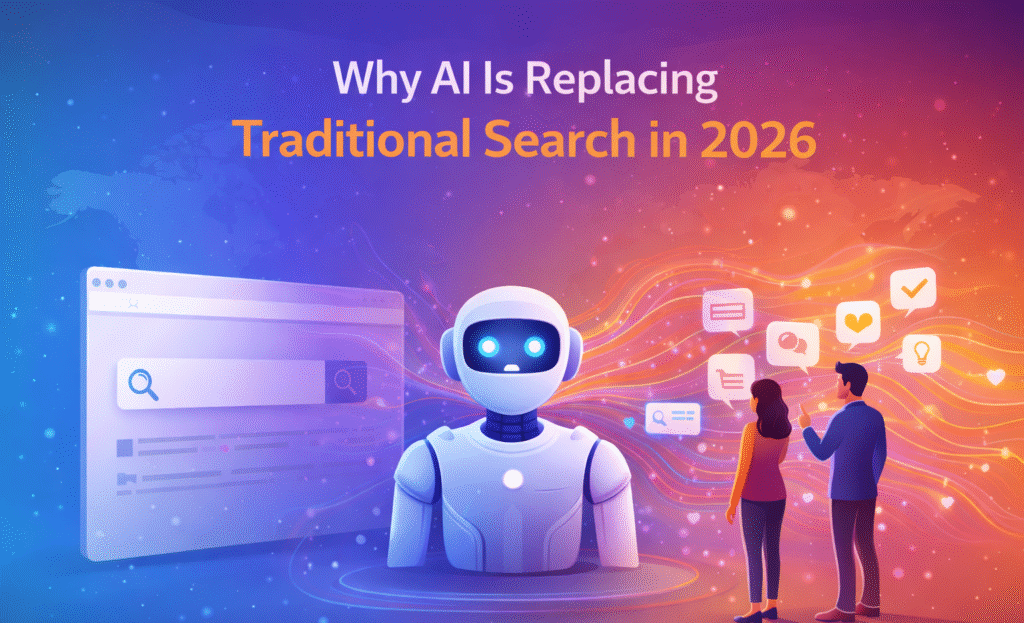
However, the internet has matured. User behavior has changed, and so has search technology. Today, search is no longer just about typing keywords into a box. It is about intent, context, trust, and instant answers. AI-powered systems now decide what information users see, often without sending them to a website at all.
At JetBoosters, a forward-thinking tech and digital solution company, we consistently observe that brands relying only on traditional SEO are losing ground, not because SEO failed, but because the world moved forward.
The Shift from Keyword Search to Intelligent Discovery
Modern search engines and AI assistants don’t simply match words. They understand meaning. They analyze user intent, historical behavior, location signals, and contextual relevance. This shift has reduced the importance of keyword density and increased the importance of semantic depth and authority.
AI-driven search platforms generate answers directly on the results page. In many cases, users get what they need without clicking a single link. This is known as zero-click search, and it is one of the biggest reasons SEO-only strategies struggle to deliver consistent growth today.
If your digital presence is not optimized for AI interpretation, your content may be invisible, even if it technically ranks.
Why Ranking First Is No Longer the Same as Being Found
Being ranked number one does not guarantee traffic anymore. AI-generated summaries, featured answers, voice responses, and predictive suggestions often replace traditional listings. Visibility now depends on whether your brand is considered a reliable source by AI systems.
This is where AI search optimization becomes essential. Businesses must structure content in a way that machines understand expertise, authority, and trust. JetBoosters helps brands evolve from basic SEO into search intelligence strategies that align with how AI engines process information.
Question is, Why Is Organic Traffic Declining Even When Rankings Stay the Same?
This happens because user behavior has changed. AI-powered answers reduce the need to visit websites. Even when rankings remain stable, click-through rates drop. Businesses that fail to adapt mistake ranking stability for success while losing actual engagement and revenue.
The Financial Impact of SEO-Only Thinking
The cost of staying behind is measurable. Let’s look at a realistic scenario.
Assume your website receives 80,000 organic visitors per month through traditional SEO. AI summaries and zero-click results reduce traffic by 35%.
That results in a loss of 28,000 visitors per month.
If your conversion rate is 2.5% and your average deal value is $120, the calculation looks like this:
28,000 × 2.5% = 700 lost conversions
700 × $120 = $84,000 lost per month
That equals more than $1 million in lost annual revenue, simply because your strategy didn’t evolve beyond SEO.
SEO Alone Cannot Build Digital Authority
Modern visibility requires more than optimized pages. AI evaluates brand signals across platforms, consistency of expertise, user satisfaction, and content depth. Thin blogs, repetitive keywords, and surface-level content no longer build authority.
JetBoosters focuses on digital authority engineering, combining SEO with AI-ready content, performance optimization, and user experience design. This approach ensures brands are recognized not just by algorithms, but by intelligent systems that influence decision-making.
How AI Determines Which Sources to Trust and Reference
AI systems are designed to identify information that is not only relevant, but also reliable and contextually sound. Instead of relying on keywords alone, AI evaluates the accuracy of content, cross-checking facts against multiple trusted sources to reduce misinformation. It analyzes topical depth, favoring content that demonstrates comprehensive understanding rather than surface-level explanations.
Credibility plays a critical role in this process. AI examines brand authority signals such as consistency of publishing, historical reliability, expert authorship, and how often a source is referenced or cited across the digital ecosystem. Structured data further enhances trust, as it helps AI interpret content clearly, understand relationships between concepts, and extract meaningful insights efficiently.
Relevance is measured through intent matching. AI determines whether content truly answers user questions in a clear, helpful, and experience-driven manner. Brands that continuously deliver expert-level insights, maintain strong technical foundations, and reinforce trust across platforms are far more likely to be selected, summarized, and referenced in AI-generated responses, ultimately gaining visibility where modern search decisions are made.
From SEO Strategy to Search Experience Strategy
Search is now an experience, not a transaction. Users interact with content across multiple touchpoints including AI assistants, mobile apps, voice search, and social platforms. Optimizing for one channel alone creates gaps in visibility.
JetBoosters helps businesses design Search Experience Optimization, ensuring that content performs well across traditional search engines, AI systems, and emerging discovery platforms. This is how brands remain visible in the long term.
Why Businesses That Adapt Early Win
Companies that embrace AI-driven discovery gain a compounding advantage. Their content becomes the reference point for answers. Their brand becomes familiar before customers even realize they are researching.
Those who delay adaptation will find themselves spending more on paid ads, chasing declining organic reach, and struggling to regain lost trust.
The Consequences of Ignoring AI-Driven Search Evolution
When businesses fail to adapt to AI-driven search and discovery, their digital visibility gradually erodes. Even if traditional rankings appear stable, fewer users reach the website as AI-generated answers, summaries, and zero-click experiences dominate search results. This silent decline often goes unnoticed until organic traffic, engagement, and brand recognition begin to drop significantly.
Over time, the cost of customer acquisition rises as brands are forced to rely more heavily on paid advertising to compensate for lost organic reach. Competitors that embrace AI search optimization gain authority, trust, and mindshare, making recovery increasingly difficult. The longer adaptation is delayed, the more expensive and complex it becomes to rebuild relevance, credibility, and long-term digital competitiveness.
The Future of Search Belongs to Adaptive Brands
The future of search is no longer about chasing algorithms or focusing solely on rankings. Modern users interact with content across multiple channels, AI assistants, voice search, apps, and social platforms, and expect relevant, accurate, and immediate answers. To stay ahead, businesses must understand how humans and machines consume information and adjust their strategies accordingly. Embracing Future SEO means creating content and digital experiences that are structured, authoritative, and easily interpreted by AI systems while simultaneously engaging human audiences. This approach ensures that brands are recognized as trusted sources across all discovery points, not just search engines.
At JetBoosters, we go beyond simple website optimization. We engineer digital ecosystems that integrate AI-driven content strategies, performance-focused design, and user experience optimization to align with the evolving search landscape. By adopting Future SEO principles early, businesses can secure sustainable visibility, strengthen trust, and drive meaningful growth. Brands that adapt today will dominate the search results of tomorrow, capturing both attention and market share in an increasingly AI-driven world.
The Bottom Line for Modern Digital Growth
If you’re still relying solely on traditional SEO, you’re not doing everything wrong, but you are limiting future growth. Search has evolved into an AI-driven, intent-based ecosystem where visibility depends on authority, adaptability, and experience, not just rankings. The brands that invest in evolving their strategies today will earn trust, relevance, and sustainable success tomorrow, while those that delay risk fading from the conversations that matter most.